Does dreadlocks damage your hair?

Andrew Patterson
Published May 21, 2026
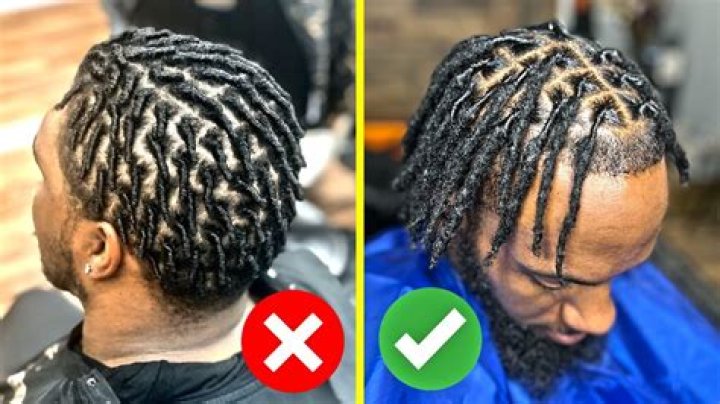
Can dreads cause damage to your hair? The short answer is no. It's quite the opposite. Dreadlocks as a hairstyle actually help protect your hair.
Do dreadlocks cause hair loss?
Traction alopecia is hair loss caused by the hair being pulled in the same way for a long time. Traction alopecia can happen to anyone who wears their hair pulled back tightly, whether in braids, dreadlocks, or a ponytail. It can also occur when tight headwear is used in the same way every day.What are the disadvantages of dreadlocks?
List Of Cons Of Dreadlocks
- Unwanted attention. Some people have negative connotations about dreadlocks. ...
- Time-consuming. You might need a bit more time to make them grow longer. ...
- Hygiene. ...
- Comfort.
Do dreads cause hair growth?
Wearing dreadlocks hinders the hair growth cycle, because hair that would naturally shed is instead interlocked in dreads, causing a drag on the scalp which is heavier than normal. The weighty drag on the scalp can cause inflammation of the scalp and hair bulb, causing hair loss.What are the benefits of having dreadlocks?
Locs promote great hair growth with minimal shedding.Because your hair is in a permanent protective style—and you won't have to manipulate your hair often—there is much less wear and tear on your strands. Your hair is free to simply grow and thrive.
Do Dreadlocks Damage Your Hair? THE TRUTH.
Do dreadlocks smell?
Dreadlocks are essentially matted hair, which has the potential to trap odors quicker than loose hair, but this doesn't mean that dreads smell bad or they're doomed to eventually smell bad. If you don't know how to care for your dreads properly, your dreads could end up with an offensive smell.Are dreadlocks a protective hairstyle?
For natural hair, they are considered a protective style because they don't require any chemicals to create. They also help the hair retain moisture, and don't put too much stress on the scalp. Dreads also require lots of patience as they can take years to be fully complete.Should I get dreads or braids?
Although they are similar hairstyles, dreads and braids are fundamentally quite different. Perhaps most apparent is the way each is structured — dreads take time to form, while braids can easily and quickly be patterned. Due to their maintenance and composition, dreads are meant to last much longer than braids.How much should dreads cost?
How much do dreads cost? Many salons charge a flat rate of $600 for the first six hours and $50 to $60 for each extra hour. Many people get average-sized locks, and the work normally takes about six hours to complete.Can you get rid of dreadlocks?
Contrary to some opinions, locks or dreadlocks can be safely removed. You will probably experience some hair loss and will see shedding of the hair that is no longer attached to the hair but is still in the lock. You may have to cut off some amount. But, with patience and the proper tools, you can remove your locks.Can you keep dreads forever?
If you take care of your dreadlocks they will stay healthy and tight and you can keep them as long as you like. As the hair continues to grow you'll help new knots form with clockwise rubbing.Are dreadlocks forever?
If you're asking yourself this question it's (almost) safe to assume that you don't have dreads yet but are considering it. The good news is that NO, no hairstyle is permanent! …What I need to know before getting dreadlocks?
10 Things You Should Know Before Starting Your Loc Journey
- There Are Different Ways To Start Your Locs. ...
- Your Parting Pattern Matters. ...
- They Sometimes Get Thicker Over Time. ...
- Developing Locs Need Water. ...
- Your Hair Density Determines The Fullness Of Your Locs. ...
- Locs Can Take A Long Time To Mature. ...
- Look Out Product Buildup.