Is the heart stopped during cardioversion?

Andrew Patterson
Published May 20, 2026
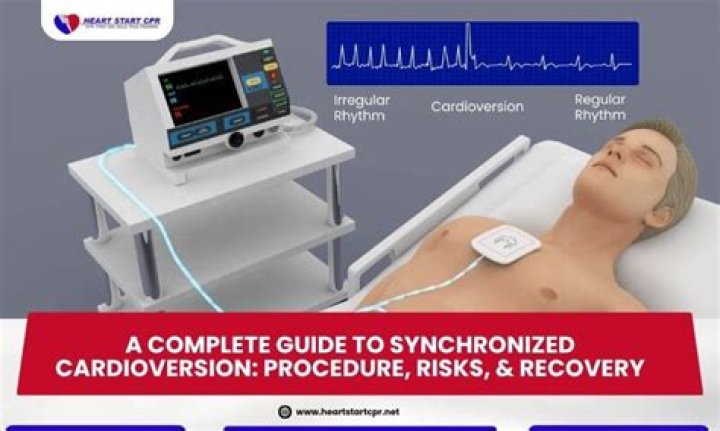
During cardioversion, a machine is used to deliver low-energy shocks to the chest while the heart rhythm is monitored. Cardioversion is a medical procedure that uses quick, low-energy shocks to restore a regular heart rhythm.
Is the patient awake during cardioversion?
Because the shock would be painful for a patient who is awake, an intravenous medication is given to sedate the patient. Patients are asleep during the cardioversion and most do not remember the procedure. It is not usually necessary to have a breathing tube (endotracheal tube) placed before the procedure.What happens after a cardioversion?
After the procedure, you may have redness, like a sunburn, where the patches were. The medicines you got to make you sleepy may make you feel drowsy for the rest of the day. Your doctor may have you take medicines to help the heart beat normally and to prevent blood clots.How long does a cardioversion usually last?
Your doctor puts patches on your chest or on your chest and back. Cardioversion itself takes about 5 minutes. But the whole procedure, including recovery, will probably take 30 to 45 minutes. You may take an anticoagulant medicine before and after cardioversion.How many times can you have a cardioversion?
There is really no limit to the number of cardioversions that people can have but at some point of time, we figure out that either it is a futile strategy or patients tend to get frustrated. But when it is a necessity that our patients who've had 20, 25 cardioversions also.Cardioversion For AFib - Get Your Heart Rhythm Back In Order
What happens when cardioversion does not work?
Repeat cardioversions can be performed. If the rhythm still doesn't stabilize, patients may be referred for catheter ablation, a procedure that destroys the heart tissue causing the irregularity.How serious is a cardioversion?
A cardioversion is usually a safe procedure, and serious problems are unlikely. There is a small risk of blood clots that may travel from your heart to your body. Your medical team will be aware of this, and they'll give you blood thinning medication to help prevent this from happening.What are the side effects of having your heart shocked?
Potential risks of electric cardioversion include:
- Dislodged blood clots. Some people who have irregular heartbeats, such as A-fib, have blood clots form in the heart. ...
- Irregular heart rhythms (arrhythmia). Rarely, some people develop other irregular heartbeats during or after cardioversion. ...
- Skin burns.