What is the next step after a colposcopy?

Eleanor Gray
Published Apr 27, 2026
Following a colposcopy, you should be invited to a follow-up appointment to check that the cells in your cervix have returned to normal. This will usually be 4 to 6 months after your colposcopy.
Do you get results immediately after a colposcopy?
It may take 4 to 8 weeks to get colposcopy results. Your colposcopist usually sends a letter with your results. If your results take longer than this, you can call the hospital or your colposcopist to check on them.What happens if colposcopy procedure is abnormal?
Biopsies sometimes happen as part of colposcopy. If your provider finds any abnormalities during your colposcopy, they can remove a sample of the suspicious tissue. It's a painless procedure that takes less than 30 minutes and doesn't require a hospital stay.What if cervical biopsy is positive?
However, if you recently had a cervical biopsy, you may need repeated Pap and HPV testing sooner. A positive test, on the other hand, means that cancer or precancerous cells have been found and further diagnosis and treatment may be needed.What comes out after a colposcopy biopsy?
Some vaginal bleeding or discharge is normal for up to a week after a biopsy. The discharge may be dark-coloured if a solution was put on your cervix. You can use a sanitary pad for the bleeding. It may take a week or two for you to get the test results.A Patient’s Guide to Colposcopy: What to Expect When Having a Colposcopy.
What happens after a positive colposcopy?
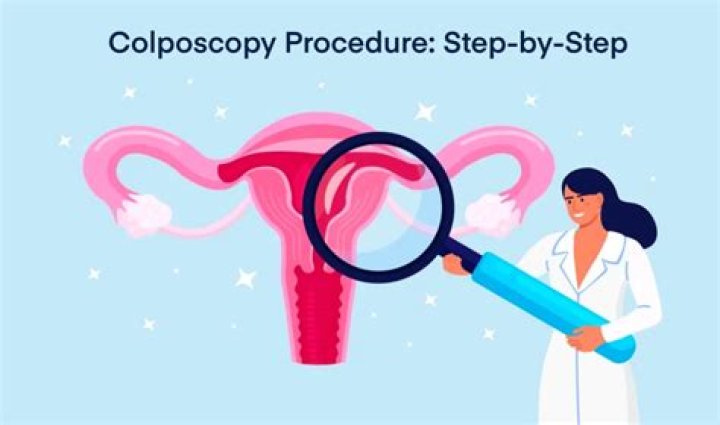
After a colposcopy, your colposcopist will usually be able to tell you what they have found straight away. If there is any uncertainty, a small sample of tissue from the cervix may need to be removed (a biopsy) for further examination. In some cases, abnormal cells can be treated during your colposcopy.How many biopsies are taken during a colposcopy?
“The full benefit of earlier detection of HSIL by screening using HPV testing will depend on improvement and standardization of colposcopy.” At least two or three biopsies should be taken based on these results.Should I get a hysterectomy if I have precancerous cells?
If the precancerous disease is more extensive or involves adenocarcinoma in situ (AIS), and the woman has completed childbearing, a total hysterectomy may be recommended. 1 During a total hysterectomy, the entire uterus (including the cervix) is removed.How serious are precancerous cells?
Often, precancerous lesions are not invasive and a person will not develop cancer. In some cases these precancerous cells, if left alone, may go on to become “invasive” cancer cells. Sometimes, it may take these cells a few years, or even decades to progress.Can HPV come back after colposcopy?
If cell changes come back, they are usually found after your follow-up appointment. If your cervical screening (smear test) done during this appointment finds high-risk HPV, you will usually have further tests at colposcopy again.What are the symptoms of HPV in females?
HPV can infect cells in the vagina and around the vulva. If a female has low risk HPV, they may see warts on the vulva. These warts may present as: a cluster that looks like a cauliflower.
...
Some symptoms of vaginal cancer include :
- bleeding after sex.
- unusual discharge.
- a lump in the vagina.
- pain while having sex.
How do I get rid of chronic HPV?
If your doctor decides to treat the abnormal cells, they may use one of these methods:
- Cryotherapy. This involves freezing the abnormal cells with liquid nitrogen or carbon dioxide.
- Conization. This procedure removes the abnormal areas.
- Laser therapy. ...
- Loop electrosurgical excision procedure (LEEP).