What material goes behind tile in a shower?

Emily Wilson
Published Apr 16, 2026
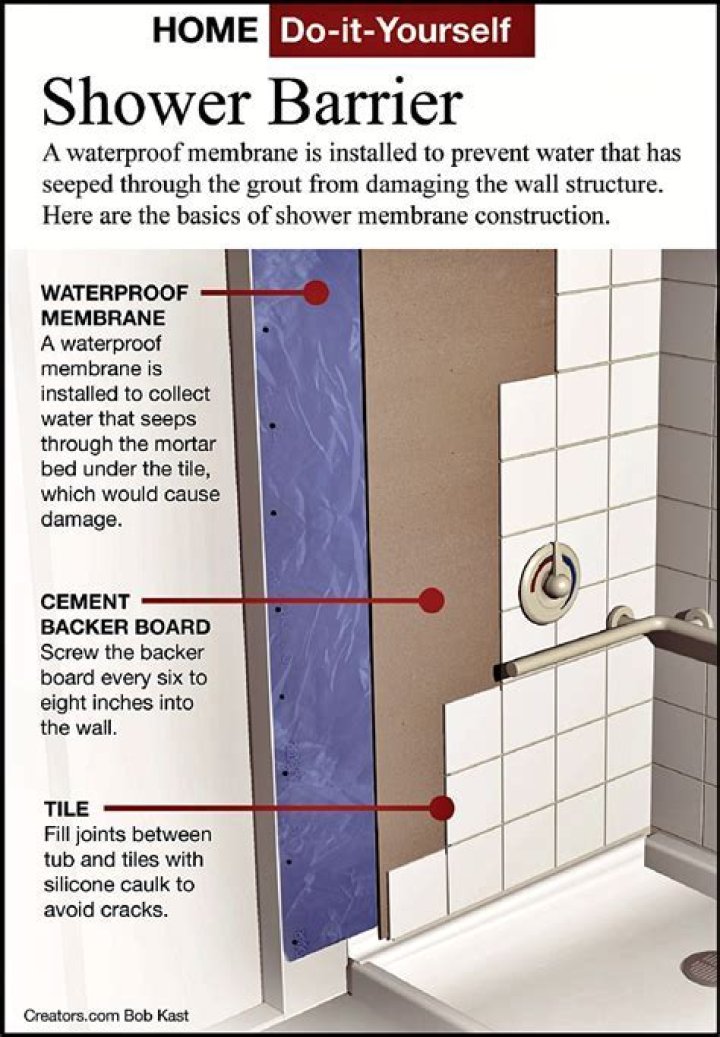
In showers, the standard substrate is tile backer, also called cement board or cement backer board.
What is the best material to use behind a tile shower?
Use an appropriate waterproof or moisture-resistant backing material behind grouted tile or stone or segmented plastic or fiberglass tub and shower surrounds. Appropriate materials include cement board which has a cementitious core and glass mats on both sides to strengthen the board.What material do you put behind a shower?
Rigid air barrier materials for use behind showers and tubs include fiber-cement, fiber-reinforced gypsum, glass mat gypsum, or fiber mat-reinforced cementitious backer panels.What should be behind bathroom tile?
Once you've removed the old tile, inspect what's behind it. If there's drywall, remove it and plan to replace it with cement backer board to protect the walls from moisture and mold. You can use drywall above the shower head, but anything below the shower head should be lined with cement backer board.What is the best backer board to use in a shower?
Cement board is a good, reliable backer board that works well on both floors and walls. Keep in mind that most tile setters err on the side of caution and brush a waterproofing membrane on top of cement board when it is in wet areas like showers or tub surrounds.4 Types of Shower Waterproofing Systems for Your Bathroom
What do you put behind wall tiles?
These are the most commonly used tile substrates:
- Cement Backer Board. Cement backer board is also called cement board, and it's the most commonly used backer board for all manner of ceramic and porcelain tiles. ...
- Fiber Cement Board. ...
- Glass Mat Gypsum Board. ...
- Styrofoam Backer Board. ...
- Water-Resistant Drywall. ...
- Plywood.