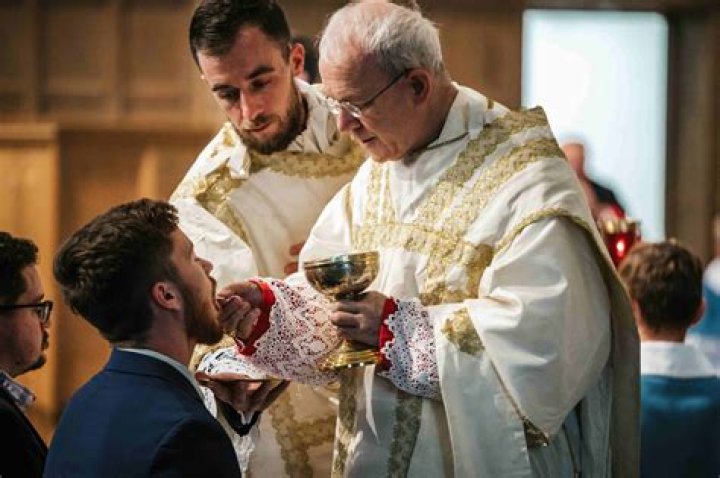
Who believed in transubstantiation?

Sophia Carter
Published Apr 09, 2026
The earliest known use of the term transubstantiation to describe the change from bread and wine to body and blood of Christ in the Eucharist was by Hildebert de Lavardin, Archbishop of Tours, in the 11th century. By the end of the 12th century the term was in widespread use.
What religions believe in transubstantiation?
Transubstantiation – the idea that during Mass, the bread and wine used for Communion become the body and blood of Jesus Christ – is central to the Catholic faith. Indeed, the Catholic Church teaches that “the Eucharist is 'the source and summit of the Christian life.Did Calvin believe in transubstantiation?
Early Reformed theologians such as John Calvin and Huldrych Zwingli rejected the Roman Catholic belief in transubstantiation, that the bread and wine of the Eucharist change into Christ's body and blood, but taught that Christ's person, including his body and blood, are presented to Christians who partake of it in ...Which type of Christians believe in transubstantiation?
In Roman Catholicism and some other Christian churches, the doctrine, which was first called transubstantiation in the 12th century, aims at safeguarding the literal truth of Christ's presence while emphasizing the fact that there is no change in the empirical appearances of the bread and wine.Did Thomas Aquinas believe in transubstantiation?
A ressourcement in Thomas Aquinas's doctrine of transubstantiation also affords an renewed appreciation of the Church's affirmation of transubstantiation as the most apt term for the interpretation of the mystery of Eucharistic conversion and a greater precision of what is centrally at stake in this mystery in the ...5 Reasons to Deny Catholic Communion in 5 mins | Transubstantiation | Faith Ministries | Chris Jack
What did St Thomas Aquinas say about the Eucharist?
He explains that the substance of Christ is not immediately present by local motion, but that it is present “by change of the substance of bread into [Christ's body].”16 This change is not a natural change; this eucharistic conversion, Thomas argues, is entirely supernatural and takes place by God's power alone (sola ...What is the relationship of the Eucharist to Baptism and Confirmation?
Each is meant to strengthen your faith and forge a deeper relationship with God. Baptism frees you from original sin, confirmation strengthens your faith and Eucharist allows you to taste the body and blood of eternal life and be reminded of Christ's love and sacrifice.Did Martin Luther believe in transubstantiation?
In the Protestant Reformation, the doctrine of transubstantiation became a matter of much controversy. Martin Luther held that "It is not the doctrine of transubstantiation which is to be believed, but simply that Christ really is present at the Eucharist".Do Greek Orthodox believe in transubstantiation?
Definitive change. Eastern Orthodox Christians generally prefer not to be tied down by the specifics of the defined doctrine of transubstantiation, though there is agreement with the definition's conclusion about the real presence of Christ in the Eucharist.Do Missouri Synod Lutherans believe in transubstantiation?
Sacramental Union and the EucharistRegarding the Eucharist, the LCMS rejects both the Roman Catholic doctrine of transubstantiation and the Reformed teaching that the true body and blood of Christ are not consumed with the consecrated bread and wine in the Eucharist.